
Fair investment, or another cost for domestic holidays?
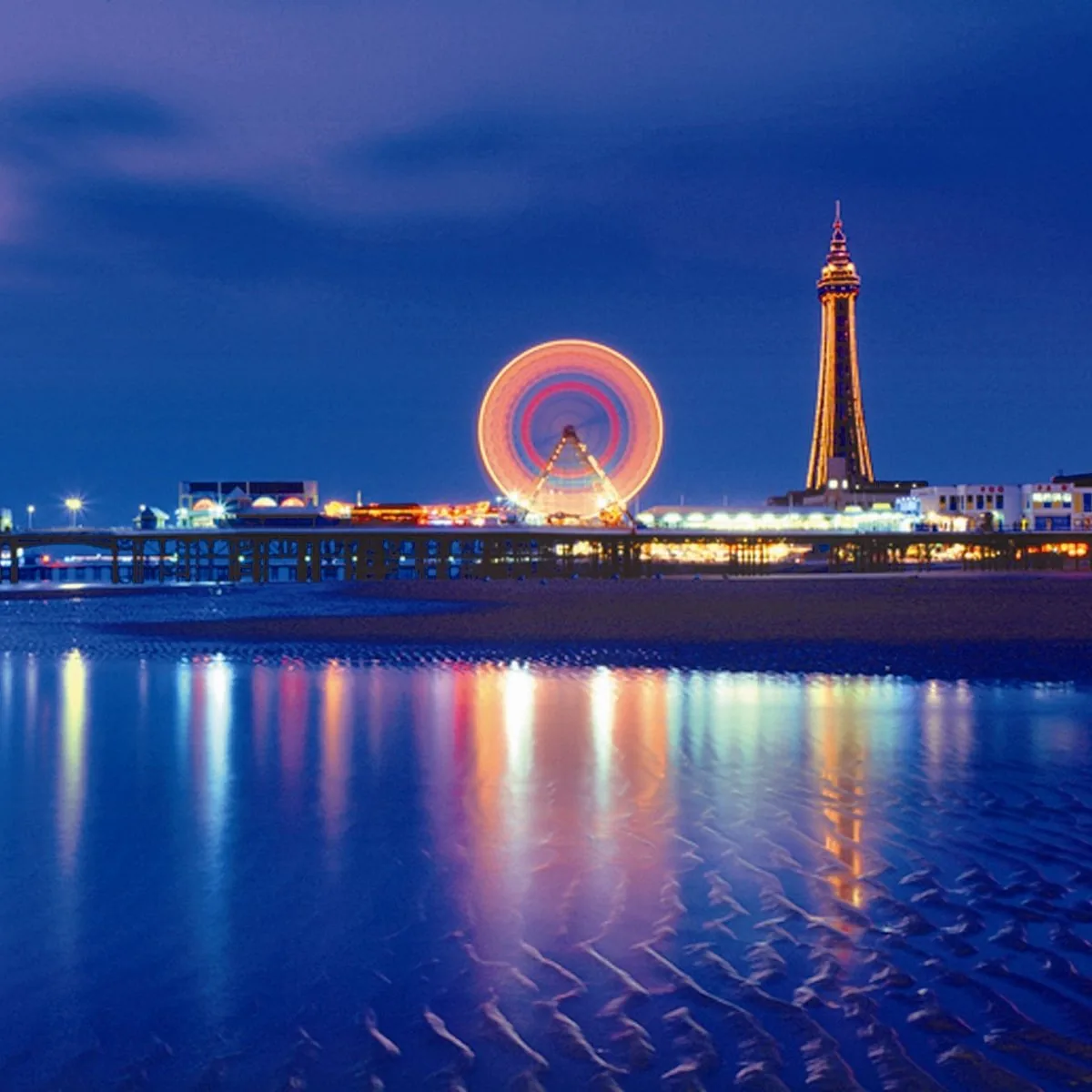
England's proposed overnight visitor levy should not be treated as a single national "tourist tax". Accommodation prices, visitor markets and local tourism economies differ substantially between London, Blackpool, the Lake District and other destinations.
Charging a percentage of the accommodation price is more proportionate than imposing the same flat nightly fee everywhere. But even a percentage-based levy could affect domestic tourism, family affordability and independent accommodation businesses if it is introduced without sensible safeguards, transparent pricing and guaranteed reinvestment in the visitor economy.
This is an invitation to hotels, holiday-let operators, tourism bodies and travellers to discuss what a workable levy would actually look like.
Picture two bookings on the same night. A family checks into a £60 room in Blackpool. A couple checks into a £250 room in London.
At 5%, the Blackpool room picks up a £3 nightly levy and the London room a £12.50 nightly levy.
That is the case for a percentage levy in miniature: the person choosing budget accommodation pays less in cash terms, while the person buying a more expensive stay contributes more.
It sounds proportionate on paper. But when a British family is already budgeting for several people, multiple nights, transport, meals and attractions, is any additional charge as painless as policymakers suggest?
What is England's overnight visitor levy?
English mayors, and potentially some other local leaders, are being given powers to introduce a levy on commercially provided overnight accommodation. It would cover hotels, B&Bs, holiday lets and Airbnb-style properties.
- The charge is expected to be calculated as a percentage of the accommodation price rather than as a nationally fixed fee.
- Local leaders would decide whether to introduce it and how locally raised revenue should be invested.
- The legislation and individual local schemes still need to be developed and consulted on.
The government argues that a percentage protects lower-cost holidays from the disproportionate effect of a flat charge. The hospitality industry, however, is warning about competitiveness, jobs and already-stretched household budgets.
Further reading: The Guardian's report and the UK government announcement.
London wants to move quickly, but London is not the whole visitor economy
Mayor of London Sadiq Khan has campaigned for visitor-levy powers and City Hall has already set up a team to develop the capital's scheme. London has indicated that its levy would be no more than 5%, although the final rate has not been confirmed, and Khan is among the mayors pushing for the new power to be implemented as soon as the legislation allows.
London's case is that the revenue could be reinvested in transport, public spaces, culture, events and the overall visitor experience. The argument has logic: London is a high-value international destination, accommodation rates are relatively high and many competing global cities already collect visitor levies.
But a model that looks manageable in London cannot automatically be assumed to work in a traditional seaside resort, a rural destination or a lower-cost regional market. City Hall says the capital's scheme will be developed with the hospitality and tourism sectors, an approach every destination should follow.
Further reading: City Hall's decision establishing its tourist levy project team.
Why does percentage versus fixed fee matter?
| Room price | 5% levy | £5 flat levy | Flat levy as share of price |
|---|---|---|---|
| £50 | £2.50 | £5 | 10% |
| £80 | £4 | £5 | 6.25% |
| £150 | £7.50 | £5 | 3.33% |
| £300 | £15 | £5 | 1.67% |
A flat charge looks simple, but it penalises budget accommodation disproportionately. A percentage preserves some relationship between the tax and what the guest can actually afford to spend on the room.
At the same time, a percentage levy produces a much larger charge on expensive city stays, and that can become material over several nights. That makes the rate, any cap on chargeable nights and the way prices are displayed genuinely important.
Domestic tourism: who actually pays?
"Tourist" can suggest a wealthy international visitor, but the levy would also reach:
- British families taking a seaside holiday
- Couples booking a domestic weekend break
- People travelling for weddings, funerals or family commitments
- Workers staying away from home
- Visitors attending concerts, sporting events or festivals
- People displaced temporarily by emergencies or repairs
A small nightly percentage may look modest in isolation, but families experience the total trip price, not each charge separately. Accommodation, rail fares or fuel, food and attraction tickets all compete for the same household budget.
When that total becomes unaffordable, people may shorten their stay, trade down, travel for the day instead or not travel at all. The lost spending is then felt by restaurants, attractions, shops and local transport providers, not just accommodation businesses.
Blackpool versus London: local flexibility must mean local thinking
Local discretion only works if decisions are based on local evidence: average room rates, seasonality, visitor profiles, occupancy and price sensitivity. It raises some questions that deserve proper answers:
- Should every mayor default to the same 5% rate?
- Should lower-value or highly seasonal destinations start at a lower percentage?
- Should there be a tax-free accommodation threshold?
- Should children, extended family stays or emergency accommodation be exempt?
- Should the levy apply for only a limited number of nights?
- Could rates change between peak and off-peak seasons?
- What happens where neighbouring authorities choose different rates?
What does the levy mean for independent accommodation providers?
Having worked within the travel and tourism industry, I know operators are already balancing payroll, energy, rates, platform commissions and the need to stay price-competitive. A lot remains unresolved:
- Who will actually collect and remit the levy?
- Will major booking platforms display it consistently and transparently?
- Is it calculated on the room price alone, or on booking fees and extras too?
- Could inconsistent presentation make a hotel's direct price look more expensive than its OTA listing?
- What administrative support will small B&Bs and guesthouses receive?
- Will accommodation providers end up blamed for a charge they never actually keep?
This levy must not hand another advantage to the large chains and platforms that already have better systems and compliance teams than independent operators.
Reinvestment is the test of legitimacy
Visible reinvestment should be a central condition of any scheme, not an afterthought. Guests and businesses are far more likely to accept a levy when they can see what it funds:
- Cleaner and safer public spaces
- Better local transport and visitor information
- Beach, trail and public-realm maintenance
- Cultural events and year-round destination marketing
- Skills development for hospitality workers
- Accessibility improvements
- Support for independent attractions and venues
Every local scheme should publish annual figures for revenue collected, administration costs, projects funded and measurable benefits. Hospitality businesses should also have formal representation in spending decisions.
If levy revenue disappears into a general budget, it will feel like just another tax. If visitors and businesses can see the destination improving, it has a far stronger claim to legitimacy.
What could a fair visitor levy look like?
These are principles for discussion, not a finished policy:
- A modest percentage, locally justified rather than automatically set at 5%.
- A national framework preventing excessive or frequently changing rates.
- A maximum number of chargeable nights.
- Clear exemptions for emergency and other non-tourism stays.
- Consideration of a minimum room-price threshold.
- One consistent method of displaying the levy across direct sites and OTAs.
- Simple collection and reporting for small operators.
- Ring-fenced reinvestment in the visitor economy.
- A formal industry role in deciding how funds are spent.
- A published review after the first one or two years, including the effect on domestic demand.
A percentage levy is arguably the least unfair way to introduce a visitor charge, because it recognises that a £60 Blackpool room and a £250 London room are not the same purchase. But "more proportionate" does not automatically mean affordable, harmless or well designed.
The success of the policy will depend on the rate, the exemptions, the administration and, most importantly, whether the money visibly strengthens the destinations being asked to collect it.
Join the industry discussion
If you run a hotel, B&B, holiday let, attraction or tourism business: would a percentage levy be preferable to a flat fee? Would 5% be manageable in your destination? What exemptions would you introduce, and who should decide how the revenue is spent?
If you travel domestically: would an extra 3% or 5% change where you stayed, how long you went away for or whether you took the trip at all?